
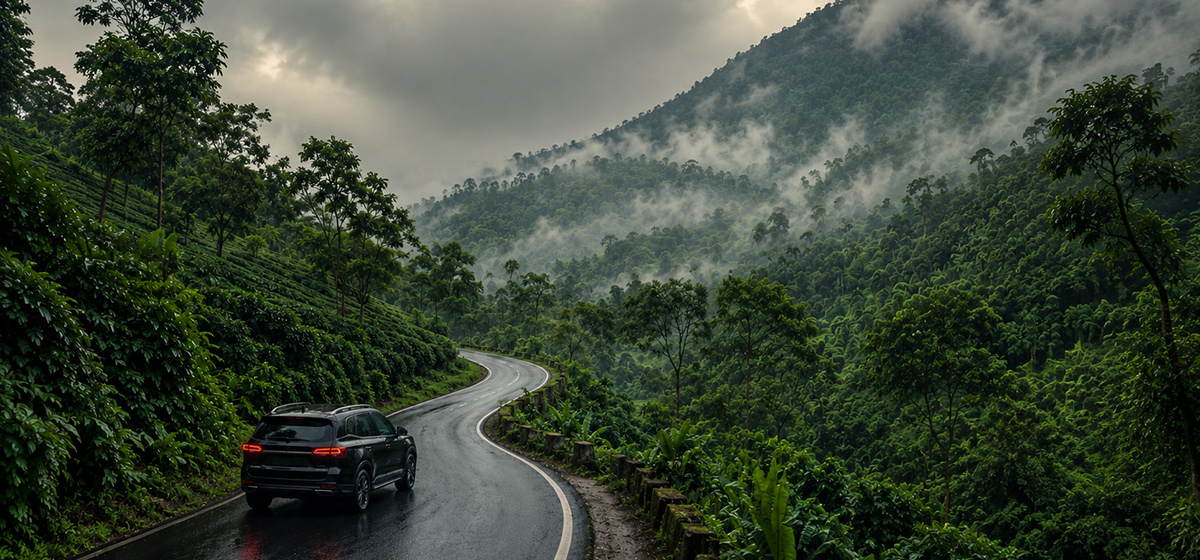
Driving Into Coorg: Every Turn on the Way to Your Wilderness Escape
There's a moment on the drive into Coorg when the highway noise fades, the air turns cool and damp, and the hills close in around you in every shade of green. That moment is really where your holiday begins, long before you check in.
If you're planning a trip to a Coorg resort like Indo Asia Heritage, the journey itself deserves as much attention as the destination. This is one of South India's most rewarding scenic drives, winding through coffee country, forest canopy, and misty ridgelines before delivering you to a proper nature retreat. Here's what to expect along the way, and how to make the most of it.
Why the Route to Coorg Is a Destination in Itself
Coorg (Kodagu) sits in the Western Ghats, a UNESCO-recognized biodiversity hotspot, and the roads leading in reflect that. Unlike a lot of hill station travel in India, where the "getting there" is something to endure, the Coorg route is something to enjoy. Depending on where you start, whether that's Bengaluru, Mysuru, or Mangaluru, you'll pass through a rotating backdrop of paddy fields, sal and teak forests, and eventually the terraced coffee estates Coorg is famous for.
Expect the drive to take:
• Bengaluru to Coorg: roughly 5 to 6 hours (250 km)
• Mysuru to Coorg: roughly 2.5 to 3 hours (120 km)
• Mangaluru to Coorg: roughly 3 to 3.5 hours (135 km)
Each route offers a different flavor of the Coorg landscape, but all three converge on the same feeling: the road narrowing, the temperature dropping, and greenery pressing in from both sides.
What You'll See Along the Way
Coffee Plantations as Far as the Eye Can See
Coorg produces a significant share of India's coffee, and you'll know you've arrived the moment the estates begin. Rows of coffee shrubs shaded by silver oak and pepper vines climb the hillsides on either side of the road. Many plantation owners welcome visitors for short stops, tastings, or guided walks, and once you check in, a proper coffee estate tour is one of the easiest ways to go deeper, learning how the beans are grown, harvested, and cured before tasting them fresh.
Waterfalls That Beg for a Detour
Coorg's rivers and streams create some genuinely spectacular waterfalls, several of which sit right off the main routes. Abbey Falls and Iruppu Falls are the best known, but depending on the season and your route, you may pass smaller, unnamed cascades tumbling through the forest. Post-monsoon (October to January) is when they're at their most dramatic, and Abbey Falls in particular is an easy add-on to a stay at a Coorg resort with activities.
Mountain Views and Misty Ridgelines
As the road climbs, the mountain views open up: layered ridgelines fading into blue-grey haze, valleys carpeted in mist during the early morning and after rain. Raja's Seat, a popular sunset viewpoint, gives you a preview of just how expansive these views get once you're settled in at the resort.
River Crossings and Forest Stretches
Several stretches of the journey involve river crossings and narrow forest roads shaded by dense canopy, a reminder that you're driving through one of India's richest wildlife corridors. Keep your camera ready; it's not unusual to spot langurs, mongooses, or a variety of birdlife along quieter stretches.
Making the Journey Part of the Adventure
For travelers drawn to adventure tourism, the road to Coorg is a warm-up act. Once you arrive, the resort itself is a launchpad for curated Coorg experiences, including:
- Trekking trails through reserve forests and coffee estate paths, ranging from easy nature walks to more demanding climbs like Tadiandamol or Brahmagiri
- Wildlife safaris and elephant encounters at nearby Dubare Elephant Camp and the Nagarhole and Bandipur National Parks, where sightings of elephants, deer, and, with some luck, big cats are common
- Guided forest walks and birdwatching at dawn, led by resort naturalists through one of the world's biodiversity hotspots
- Coffee estate tours that combine outdoor activity with a look at how your morning cup is grown and processed
If you're the type who wants a resort getaway with an active edge rather than pure lounging, Coorg delivers both without asking you to choose. And if you'd rather balance the adventure with some downtime, the resort's wellness and spa experiences are worth building into your itinerary too.
Best Photography Spots on the Way In
Coorg rewards anyone who travels with a camera or a good phone. Some reliable photography spots along the route and around the resort include:
- Elevated viewpoints along the ghat roads, especially just after sunrise
- Coffee estate rows during golden hour, when light filters through the shade trees
- Waterfall stops, particularly Abbey Falls with its suspension bridge vantage point
- Misty valley views from Raja's Seat or Mandalpatti
- Paddy fields near Kushalnagar, which turn a vivid green during the growing season
Pack a lens cloth, since the humidity and mist mean condensation is a real thing out here. For inspiration before you go, the resort's photo gallery is a good place to see what these spots look like across different seasons.
Cultural Experiences Along the Route
Coorg isn't just landscape, it has a distinct culture worth slowing down for. The Kodava community has its own language, cuisine, and traditions, quite different from the rest of Karnataka. As you pass through towns like Madikeri and Kushalnagar, look out for:
- Namdroling Monastery (the Golden Temple) near Kushalnagar, one of the largest Tibetan settlements in South India
- Madikeri Fort and Omkareshwara Temple, reflecting Coorg's layered history under the Kodava kings
- A Cultural Village Visit to a working Kodava household, where you can see traditional home architecture, Coorghi cooking, and hear stories from elders about the land
- Roadside stalls selling Coorg specialties like pandi curry, kadambuttu, and fresh honey, worth a stop even if you're not stopping for long
These small detours add texture to the journey and give you a fuller picture of the region before you even reach the resort gates. You can explore the full list of guided village visits, monastery trips, and heritage tours on the Coorg experiences page.
Arriving at Your Coorg Retreat
After hours of winding roads, waterfalls, and coffee-scented air, checking in feels like the natural conclusion to the drive rather than a separate destination. At Indo Asia Heritage in Coorg, that feeling is intentional. The property sits amid the same plantation landscape you've been driving through, with open-air common areas, forest-facing cottages, and easy access to the trails and viewpoints you passed on the way in. If you'd rather stay closer to Madikeri's cafés, markets, and landmarks, the Madikeri property offers the same comfort with a more town-connected setting.
Whether you're planning a quiet nature retreat or an activity-packed few days of trekking and safaris, the road here is your first taste of what makes Coorg worth the trip. Pack accordingly, plan a few stops, and give yourself extra time. You'll want it.
Ready to experience it yourself? Browse current stay offers and packages, or head straight to Book a Stay and let the drive be the first chapter of your getaway. Have questions before you go? Get in touch with the team; they're happy to help plan the trip end to end.
Frequently Asked Questions
What is the best time of year for a scenic drive to Coorg?
October to March offers the clearest skies and most comfortable driving conditions, while July to September (monsoon) brings the fullest waterfalls but slower, wetter roads.
Is the road to Coorg suitable for a self-drive trip?
Yes. The routes from Bengaluru, Mysuru, and Mangaluru are well-maintained, though the final stretch involves ghat roads with sharp curves, so it's best driven in daylight, especially during monsoon.
How many days should I plan for a Coorg trip including the drive?
Most travelers spend 3 to 4 days: one for arrival and settling in, one to two for treks, safaris, or plantation visits, and a day for the return journey.